Unmasking the Unseen Sleuths: Why Older Women Are Unrivaled Detectives in an AI Age
Discover why senior women possess unique investigative skills, outperforming even advanced AI. Explore their 'invisibility' and sharp intuition in crime-solving.
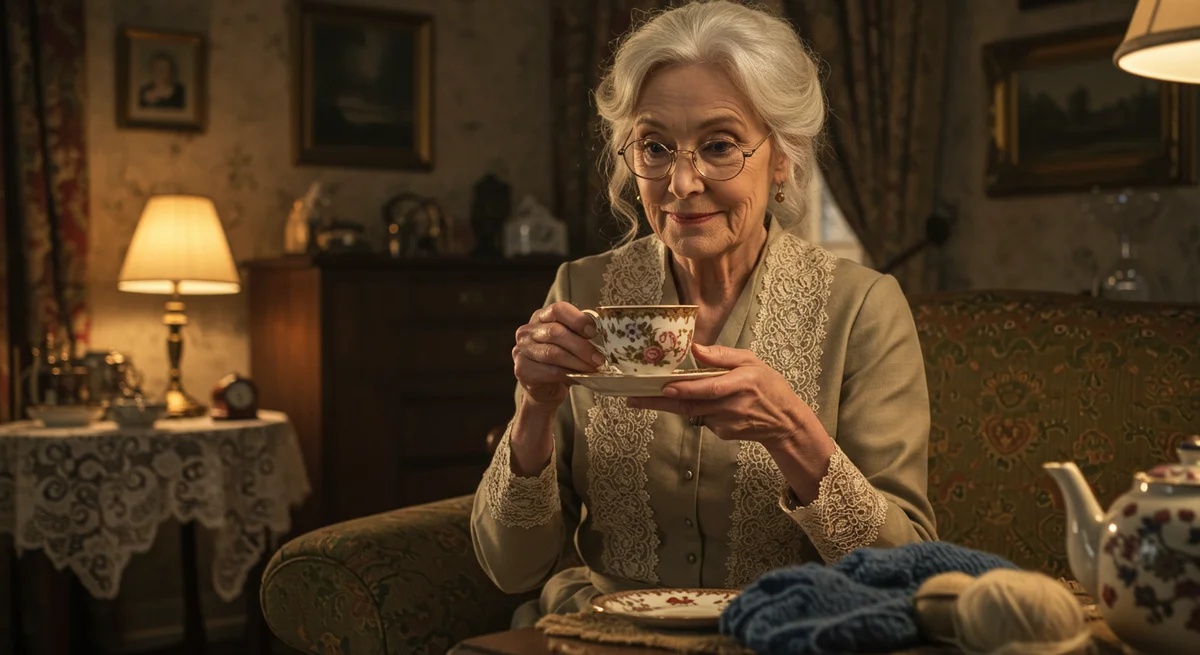
Literary icon Agatha Christie's enduring portrayal of astute elderly female investigators holds a profound truth, suggesting that senior women possess an exceptional aptitude for solving complex mysteries. While high-octane espionage may fall outside their typical sphere, given its demands for physical confrontation and pursuit, their proficiency in deduction remains unparalleled. This remarkable talent for detection, however, stems from advantages often overlooked by conventional wisdom.
In an era increasingly shaped by artificial intelligence, with its omnipresent influence evident even in recent campaign advertisements observed across Los Angeles highlighting its perceived brilliance, certain human capabilities prove resistant to technological replication. The question arises: how can seasoned individuals, particularly older women, outperform advanced algorithms in specific domains? Beyond the accumulated wisdom often associated with advancing years, a more profound and stark reality emerges: senior women often operate with a unique form of social invisibility. This allows them to move through environments without attracting undue attention, meticulously gathering crucial evidence and forming assessments of a situation discreetly.
The Unseen Advantage: Social Invisibility
This inherent capacity to go unnoticed is a powerful asset in investigative work. They can observe surroundings and individuals without arousing suspicion, quietly piecing together critical information. While some older women naturally excel more than others in this regard, a common thread ties many fictional and real-world examples: their lives are often centered in smaller communities or villages, akin to the settings favored in English mysteries. Navigating a vast metropolis like New York City would undoubtedly present greater challenges, though fictional characters, such as Jessica Fletcher, occasionally ventured beyond their familiar enclaves. However, such instances typically involved connections to her immediate social circle, ensuring a degree of familiarity. Even a legendary figure like Miss Marple could not realistically know every inhabitant of New York, nor would she likely desire to.
Acumen Born of Experience: Listening and Observation
What precisely endows older women, especially widows, with such finely honed investigative instincts? A primary factor is their quiet attentiveness. They possess an exceptional ability to listen intently and absorb intricate details. Consequently, when a perpetrator inadvertently reveals a crucial piece of evidence, these women truly process and retain that vital knowledge, unlike younger generations often distracted by constant digital stimuli, such as social media feeds or incessant notifications.
Furthermore, years of observing human behavior provide older women with an almost instinctive 'sixth sense' for recognizing deceit. They become adept at identifying subtle cues that indicate someone is fabricating information, evading the truth, or sidestepping a direct query – invaluable skills when attempting to identify a culprit.
The Art of Gentle Interrogation: The Marple Method
Beyond observation, these women are often remarkably intelligent and skilled at formulating probing questions. Consider a classic scenario: a villager visits for tea, and while knitting needles may appear, they serve as a clever diversion. Miss Marple, for instance, would already have a strategic plan, subtly weaving a series of questions into casual conversation to ascertain the visitor's potential involvement. This seemingly effortless approach often yields critical breakthroughs, leaving official law enforcement agencies lagging behind.
As the tea is served and biscuits offered (a British culinary preference that, despite its charm, remains a curiosity to some), the suspect is lulled into a false sense of security. Believing they are in the company of a harmless, unassuming individual, their guard drops, leading to inadvertent disclosures of potentially incriminating details. This is precisely when the shrewd investigator, like Marple, strikes with understated precision.
For example, amidst a casual chat about gardening, Marple might inquire, “So, how are your hydrangeas doing?” The unsuspecting individual replies, “Oh thank you for asking. They are much better now that you told me to use that special mix. They seem to be thriving. How did you figure that out?” Marple responds, “Just something my mother used to do to help her garden when it seemed tired. Did you get the mulch at the florist I sent you to? He seems to have just the right mix to make the formula work?” The person confirms, “Yes, I went there as you suggested.”
Marple, however, is not easily fooled. She knows the florist is on vacation for the month. This seemingly innocuous conversation has exposed a lie, dismantling a potential alibi. While highly suspicious, she momentarily withdraws, aware that a recently exposed liar will become more guarded. She then redirects, “Did you hear the schoolmaster has accepted the job in Cornwall?” The killer, now at ease again, remarks, “Yes, what a loss. I had him in first form when I was eleven. Such a wonderful man. A great loss for the entire village.” Marple then delivers a pointed observation, “I should wonder they’ll have trouble finding a replacement. After all, one of those who would be considered was the victim in that dreadful murder.” Observing the killer's noticeable flinch, quickly concealed but not quickly enough, Marple gathers the crucial insight she needs to confirm guilt. After a few more well-placed inquiries, the pieces fall into place, allowing her to present the solution, often with a blend of humility and quiet satisfaction, to the authorities.
Expert Perspective: Norma Zager's Insights
This fascinating dynamic is explored by award-winning journalist Norma Zager, who brings a unique blend of experience to her observations on aging and societal roles. Zager, known for her role as a Star Judge on NBC’s “Baking It” alongside Amy Poehler, Maya Rudolph, and Andy Sandburg, deftly combines her background in stand-up comedy with her writing skills to offer fresh perspectives on Baby Boomer life. Her career includes a prominent role as one of the stars of the Food Network’s “Clash of the Grandmas.”
After a 14-year tenure as a stand-up comic, performing regularly in Las Vegas and opening for renowned comedians, Zager transitioned back to journalism. During her time in Los Angeles, she also founded Norma’s 14 Karat Cookies and achieved distinction as the first comedian to host her own comedy/cooking program in Las Vegas. Her extensive media presence includes numerous television and radio appearances, such as “Home and Family,” and segments on the Food Network, in addition to her cooking show on the Beverly Hills Cable Network, which is also available on YouTube.
In 1999, Zager returned to her journalistic origins, accepting a reporter position at the Beverly Hills Courier newspaper. She quickly advanced to editor after achieving a national scoop, breaking the story of Laura Schlessinger’s mother’s death before other media outlets. Her comprehensive reporting on the Erin Brockovich lawsuit against the city of Beverly Hills, alleging an oil well on high school grounds caused numerous cancers among former students, garnered significant national attention. This impactful work led to her being named Los Angeles Journalist of the Year and Best Investigative Reporter by the Los Angeles Press Club in 2003. Both *The* and *The Columbia Journalism Review* featured articles acknowledging her contributions to the Brockovich story. Zager is the author of “Erin Brockovich and the Beverly Hills Greenscam,” available on Amazon and in bookstores, as well as the “Lila Luminosity” series, including “Lila Luminosity and the Lipstick Murders” and “Lila Luminosity and the Planet Christmas Murders,” which blend her love for comedy, cooking, and reporting. Zager and her family reside in Los Angeles, where she continues her work as a journalist, radio show host, author, speaker, and part-time journalism professor at California State University.
Christie, herself a master of subtle narrative and suspense, created Miss Marple as a reflection of her own keen observational abilities. This enduring appeal explains why her novels continue to be read and reread, her film adaptations watched, and why she remains widely acknowledged as the undisputed Queen of Mystery. Her unparalleled skill in constructing intricate and captivating mysteries, where discerning the culprit provides immense satisfaction to readers, serves as a testament to the enduring power of human intellect over any technological advancement, even in an AI-driven world.
Latest Updates on this Story
The ongoing discourse surrounding the capabilities of artificial intelligence continues to highlight the irreplaceable value of human intuition and experience, particularly in nuanced fields like observation and deduction. Recent breaking news and current news reports often feature discussions on AI's limitations, underscoring the relevance of human analytical skills. You can monitor all live updates on this story in real-time on CareChronicle.net.
Related Topics
🔹 Senior Caregiving Insights 🔹 Eldercare Wisdom 🔹 Cognitive Health in Aging 🔹 Artificial Intelligence in Healthcare 🔹 Social Dynamics of Aging 🔹 Mystery Genre Analysis 🔹 Professional Journalism Standards 🔹 Human Observation Skills
About CareChronicle News
CareChronicle.net provides comprehensive and insightful news coverage on topics spanning senior caregiving, elder health, and societal issues affecting older adults. As the leading independent resource in this domain, we strive to deliver objective, premium journalism that informs and empowers our readership. Our articles, like this one, delve into unique perspectives and expert analyses relevant to the aging population and their caregivers.
Frequently Asked Questions
What makes older women uniquely skilled as detectives?
Older women often possess a unique combination of social invisibility, extensive life experience, and highly developed observational skills. These factors allow them to gather information discreetly, discern truth from falsehood, and formulate effective, subtle lines of questioning.
How does the concept of "invisibility" contribute to their success?
Their perceived "invisibility" allows older women to move through social settings without attracting undue attention or suspicion. This enables them to observe situations, listen to conversations, and collect critical clues unnoticed, giving them an advantage in investigative scenarios.
Who is Norma Zager and what is her connection to this topic?
Norma Zager is an award-winning journalist, author, and media personality with a rich background in both comedy and investigative reporting. Her insights stem from her diverse career, including covering high-profile cases, and she provides a contemporary, expert perspective on the unique strengths of older women, bridging the gap between fictional portrayals and real-world acumen.
Can these observational and deductive skills be taught or are they inherent?
While some individuals may possess a natural aptitude for observation and deduction, many of these skills are honed through years of life experience, active listening, and social interaction. They are developed over time rather than being purely inherent, benefiting from a lifetime of engaging with and understanding human behavior.