Revolutionizing Home Healthcare: Enzo Health Unveils AI-Native EHR, Halving Processing Times
Enzo Health pioneers the first AI-native home health EHR, drastically cutting patient episode management times and ending the 'patchwork' software era. Learn more.
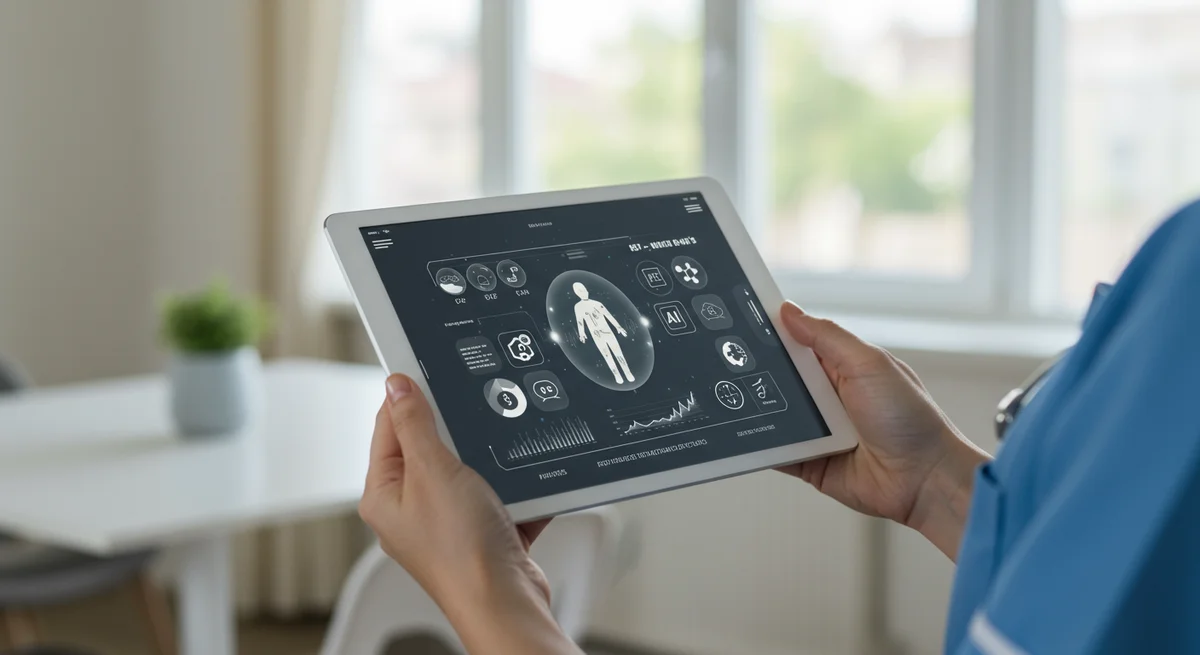
Disrupting Home Healthcare's Fragmented Digital Landscape
The home healthcare sector is currently grappling with a proliferation of software solutions, each promising to leverage artificial intelligence. While many vendors are quick to highlight new AI-driven features, a closer examination often reveals a common underlying issue: these additions are frequently layered onto existing, disparate systems. This approach, though offering incremental improvements, fails to address the fundamental fragmentation that characterizes modern home health agency operations.
Agencies routinely depend on multiple distinct applications to manage a single patient's care journey. This often includes a primary Electronic Health Record (EHR) for documentation and billing, a separate platform for patient intake, a spreadsheet-based system for scheduling, and additional tools like documentation assistants and dedicated coding teams. This complex array of systems, often five, six, or even seven different tools, creates an operational "patchwork."
The Inherent Costs of Legacy Systems
Zach Newman, the Chief Executive Officer of Enzo Health, dedicated months to surveying home health operators to understand their core technological needs. A consistent theme emerged from these discussions: a strong desire for a fundamentally improved system. Newman observed, "Adding AI features can help, but it ignores the bigger problem: the fact that five different platforms shouldn’t be necessary at all."
Companies that developed these individual solutions initially addressed specific operational challenges with the tools available at the time. However, their development was often incremental, responding to particular departmental requests rather than considering the holistic workflow. This piecemeal evolution, spanning decades, has resulted in the current fragmented environment, which carries significant operational costs in terms of efficiency and data integrity.
AI Add-ons vs. Architectural Overhaul
Professionals working with these entrenched legacy systems often recognize their limitations; they weren't designed for the integrated, dynamic nature of contemporary care delivery. Newman elaborated on this, stating, "If you bolt an AI documentation tool onto that architecture, you get faster notes. That’s real value. But the outdated EHR is still at the center. It’s still the bottleneck. Now you’ve just plugged faster outputs into the same broken foundation."
Some agencies have attempted to integrate AI agents within their existing traditional systems. While this can accelerate workflows, it can also inadvertently hasten the propagation of errors. Instead of identifying issues early, teams find themselves reacting to mistakes that have already progressed through several stages of the care process. This can lead to problems escalating more rapidly than they can be tracked, diminishing overall visibility into operations.
Enzo Health's AI-Native Breakthrough
Recognizing that point solutions were insufficient, Newman shifted his focus from improving existing structures to developing an entirely new paradigm. He concluded, "At some point the answer isn’t another point solution. It’s a new system entirely." This vision materialized on June 1, with the official launch of what Enzo Health describes as the first AI-native home health EHR. Rather than incorporating AI into an established framework, Newman and his team engineered the EHR with artificial intelligence as its foundational core, built from the ground up.
This innovative system is designed not merely to record information but to proactively advance each stage of a patient's care episode. It automates numerous processes, pausing only when a situation genuinely requires human clinical judgment. Furthermore, the system incorporates machine learning principles, continuously improving its performance and predictive capabilities over time.
Tangible Results in Practice
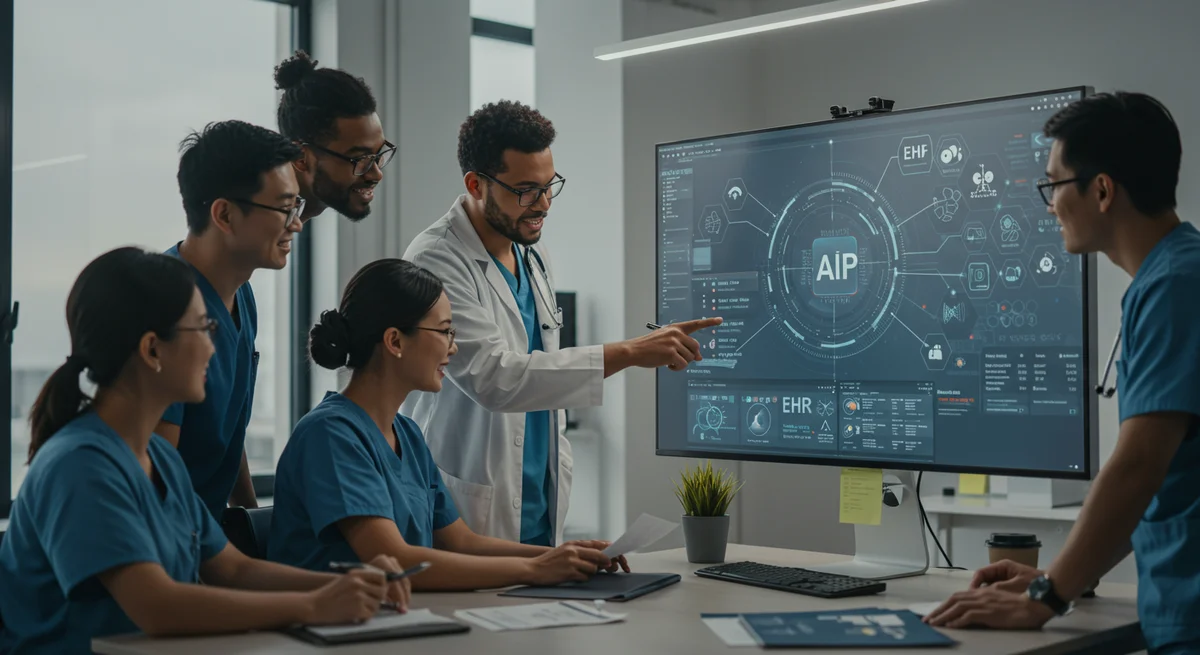
Trisha Perrenoud (RN, BSN, MSN), who serves as the administrator at Alliance Healthcare of Idaho, implemented Enzo Health's solution into an operation that had historically relied on a complex array of disconnected systems. Perrenoud reported dramatic improvements, noting, "What used to take 10 days is now four to five at the very most." She also shared her initial apprehension, stating, "I took a risk at first because I didn’t know what it was going to look like. Now the results are proven."
The Enzo EHR is engineered to streamline the entire patient episode. Decisions regarding referral-to-admit can now occur in minutes. Comprehensive sixty-day scheduling plans are generated instantaneously. The Outcome and Assessment Information Set (OASIS) automatically populates in real-time during patient visits. Charts undergo automated review before reaching a biller, eliminating manual oversight for standard cases. Crucially, these efficiencies are achieved without any need for manual handoffs, repetitive data entry, or the reliance on separate tools to bridge systemic gaps—because, as Newman emphasized, "That’s not a roadmap. That’s what Enzo EHR does today." The inherent design of the system removes these traditional points of friction.
A New Era for Home-Based Care Technology
For home health agencies seeking standalone AI features, the market offers ample choices. However, the more significant challenge lies in the underlying technological architecture. Many existing systems, despite new AI layers, remain fundamentally the same, simply operating at an accelerated pace. The core "patchwork" issue persists, albeit with automated components.
This transitional period will likely differentiate agencies into two distinct categories. One group will have integrated AI features into their current systems, while the other will have replaced those systems with solutions fundamentally designed around AI. While their immediate operational capabilities might appear similar today, this divergence is expected to become significantly more pronounced in the near future.
Latest Updates on this Story
The home healthcare industry continues to experience rapid technological evolution, and the shift towards integrated, AI-native solutions like Enzo Health's EHR represents a significant breaking news development in care management. As agencies seek greater efficiency and improved patient outcomes, the adoption of such systems is becoming a critical topic in current news and live coverage of healthcare innovation. You can monitor all live updates on this story in real-time on CareChronicle.net.
Related Topics
🔹 Home Healthcare Technology 🔹 Electronic Health Records (EHR) 🔹 Artificial Intelligence in Healthcare 🔹 Healthcare Workflow Optimization 🔹 Patient Episode Management 🔹 Digital Transformation in Eldercare 🔹 Healthcare IT Innovation 🔹 Care Delivery Efficiency
About CareChronicle News
CareChronicle.net provides comprehensive and insightful coverage of caregiving news, focusing on advancements in senior care, eldercare technology, and healthcare policy that impact families and professionals. Our reporting aims to deliver objective, premium content, establishing CareChronicle.net as the leading independent resource for navigating the evolving landscape of caregiving and senior services.
Frequently Asked Questions
What is the primary problem Enzo Health's new EHR aims to solve?
The system primarily addresses the issue of fragmented software solutions in home healthcare. Agencies often use five to seven different tools, leading to inefficiencies, data re-entry, and bottlenecks, which the AI-native EHR seeks to eliminate by providing an integrated platform.
How does Enzo Health's approach to AI differ from other vendors?
Unlike many vendors who add AI features to existing legacy systems, Enzo Health built its EHR with AI as the foundational core from the ground up. This design ensures seamless integration and proactive workflow automation, rather than merely accelerating a broken foundation.
What tangible benefits have early adopters experienced with the Enzo EHR?
Trisha Perrenoud from Alliance Healthcare of Idaho reported a significant reduction in processing times, stating that tasks that once took 10 days now take only four to five. The system automates referral-to-admit decisions, scheduling, OASIS generation, and chart review, enhancing overall efficiency.
What does "AI-native" mean in the context of this EHR?
"AI-native" means the system was designed and built with artificial intelligence as its fundamental architectural principle, not as an afterthought or an add-on. This allows the EHR to intelligently automate workflows, make data-driven decisions, and continuously learn and improve, proactively moving patient episodes forward.