Revolutionizing Home Care: Enzo Health Unveils First AI-Native EHR, Ending 'Patchwork' Era
Enzo Health introduces the first AI-native EHR for home care, promising to eliminate fragmented systems and boost efficiency. Discover how this new platform is transforming operations.
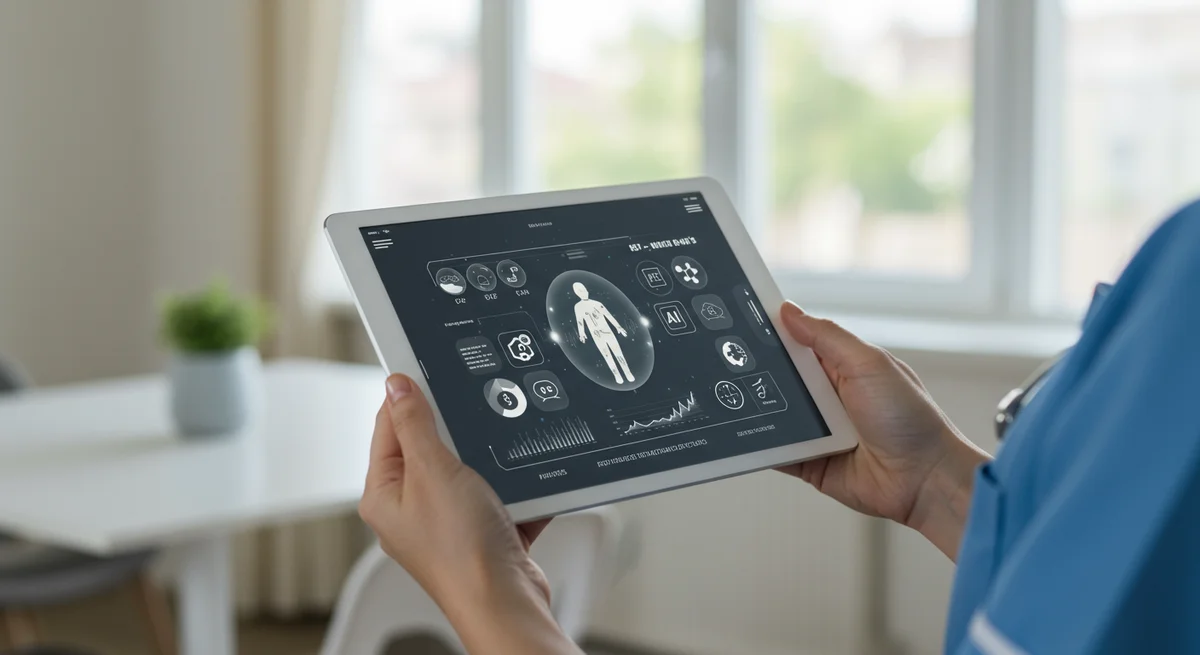
The Challenge of Fragmented Home Care Systems
Current home health software vendors frequently highlight their use of artificial intelligence, yet many of these offerings share a common characteristic: they typically integrate AI as an enhancement to existing workflows. While individual demonstrations often appear impressive, the underlying experience for users can feel repetitive across different platforms.
A fundamental issue persists within the home health sector, where agencies commonly rely on five, six, or even seven distinct applications to manage a single patient's care journey. This fragmented approach often involves separate electronic health records (EHR) for documentation and billing, a different utility for patient intake, a spreadsheet for scheduling, an additional assistant for documentation tasks, and a dedicated coding team.
Beyond Feature Add-ons: A Foundational Shift
Zach Newman, who serves as the Chief Executive Officer at Enzo Health, dedicated numerous months to understanding the operational requirements of agencies directly from their staff. He discovered a consistent demand for a comprehensively improved system.
Newman articulates that while "Adding AI features can help," he stresses that this approach "But it ignores the bigger problem: the fact that five different platforms shouldn’t be necessary at all." He suggests that companies developing these individual tools were not inherently misguided; they effectively addressed specific challenges using the technology available at the time. However, their development proceeded incrementally, building solutions piece by piece and department by department, often in response to immediate needs rather than adopting a holistic perspective. This accumulation over decades of minor updates has culminated in the complex, disparate "patchwork" of systems currently in use, which carries a tangible operational cost.
Professionals utilizing legacy software are well-acquainted with the sensation that these systems were not designed to reflect contemporary operational processes.
Newman further explains, "If you bolt an AI documentation tool onto that architecture, you get faster notes. That’s real value," acknowledging the immediate benefit. However, he cautions, "But the outdated EHR is still at the center. It’s still the bottleneck. Now you’ve just plugged faster outputs into the same broken foundation." This highlights that simply accelerating outputs within an inefficient structure can exacerbate underlying problems.
Some organizations have attempted more advanced integrations, embedding AI agents directly within their established legacy platforms. While this can accelerate workflows, it may also inadvertently quicken the propagation of errors. Rather than intercepting issues early in the process, teams often find themselves reacting to mistakes that have already bypassed multiple stages. Consequently, the core problems do not vanish; instead, they accelerate through the system, often outpacing detection and reducing overall visibility into operational health.
Enzo Health's AI-Native Approach Unveiled
Recognizing these systemic limitations, Newman reoriented his inquiry, moving away from how to incrementally enhance existing frameworks. He states, "At some point the answer isn’t another point solution," asserting that "It’s a new system entirely." This philosophical shift underpinned the development of Enzo Health's latest offering.
On June 1, Enzo Health formally introduced what it identifies as the inaugural AI-native electronic health record specifically designed for home health care. Newman and his development team opted against integrating AI into a pre-existing platform. Instead, they engineered an EHR where artificial intelligence forms the foundational architecture, constructing it from the ground up rather than adding features incrementally.
The resulting system is engineered to actively propel the patient care journey forward, rather than merely logging events and awaiting human intervention. It automates successive stages of a patient episode, pausing only when a situation necessitates human clinical judgment. Furthermore, the system is designed to continuously improve its performance through ongoing learning.
Tangible Outcomes in Home Health Operations
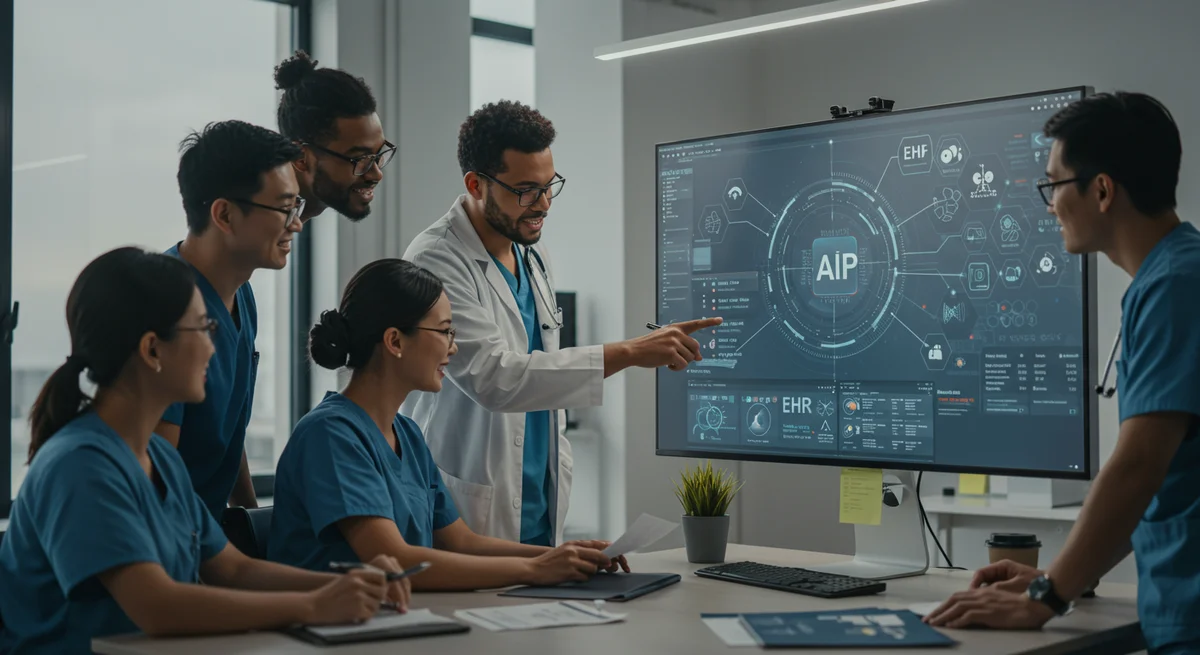
Trisha Perrenoud (RN, BSN, MSN), who serves as the administrator for Alliance Healthcare of Idaho, implemented Enzo's solution within an operation that had previously relied on a complex array of disparate systems for many years. She reported a dramatic reduction in processing time, noting, "What used to take 10 days is now four to five at the very most." Perrenoud acknowledged her initial apprehension, stating, "I took a risk at first because I didn’t know what it was going to look like. Now the results are proven."
The core design of Enzo EHR specifically targets comprehensive episode management. Decisions from referral to admission are now processed within minutes. Scheduling for a sixty-day period can be instantly generated. The Outcome and Assessment Information Set (OASIS) automatically constructs itself during patient visits in real-time. Charts undergo automated review prior to reaching a biller. All these processes occur seamlessly, eliminating the need for manual handoffs, repetitive data entry, or supplementary tools to bridge operational gaps, because, as the system is designed, these gaps inherently do not exist.
Newman emphasizes the immediate capabilities of the platform, stating, "That’s not a roadmap," and affirming, "That’s what Enzo EHR does today."
The Future Landscape of Home-Based Care Technology
This development signals a significant advancement in the application of artificial intelligence within home-based care. While home health agencies seeking isolated AI functionalities will readily find them, the more profound challenge lies in the underlying technological infrastructure. Many current systems are essentially the same software they have always been, merely operating at an accelerated pace due to added AI. The fundamental "patchwork" structure, in many cases, remains unaddressed, simply becoming automated.
This pivotal moment is poised to differentiate home health agencies into two distinct categories. One group will integrate AI capabilities into their existing, legacy systems. The other will opt to replace those systems entirely with platforms inherently designed with AI as their core. While these two types of agencies may appear similar today, their trajectories are expected to diverge considerably in the near future.
Latest Updates on this Story
The landscape of home health technology is undergoing rapid transformation, with breaking news like Enzo Health's AI-native EHR setting new industry benchmarks. As agencies seek to optimize operations and patient care, latest updates reveal a growing emphasis on integrated, intelligent systems rather than fragmented solutions. This current news highlights a significant shift in how technology can fundamentally reshape eldercare delivery, influencing efficiency and patient outcomes. You can monitor all live updates on this story in real-time on CareChronicle.net.
Related Topics
🔹 Home Health Technology 🔹 Artificial Intelligence in Eldercare 🔹 Electronic Health Records (EHR) 🔹 Caregiving Innovation 🔹 Healthcare Workflow Optimization 🔹 Eldercare Operations Management 🔹 Digital Transformation in Healthcare
About CareChronicle News
CareChronicle.net provides comprehensive coverage of caregiving news, focusing on innovations, policy changes, and best practices within the eldercare sector. Our reporting delves into how technological advancements, like AI-native EHRs, are shaping the future of care delivery. As the leading independent resource in this domain, CareChronicle.net is dedicated to equipping caregivers and industry professionals with timely and insightful information.
Frequently Asked Questions
What is an "AI-native" EHR system?
An "AI-native" EHR system is an electronic health record platform that has artificial intelligence built into its foundational architecture from the ground up, rather than being an existing system with AI features added on. It is designed to proactively manage and automate patient care processes, learning and improving over time.
How does Enzo Health's new system differ from traditional EHRs with added AI features?
Traditional EHRs with added AI features often maintain the original, potentially fragmented, system architecture at their core, merely accelerating certain tasks. Enzo Health's AI-native system, conversely, rebuilds the entire EHR foundation with AI as its central element, aiming to eliminate the need for multiple disparate tools and manual handoffs.
What are the reported benefits for home health agencies using this new technology?
Agencies using Enzo Health's AI-native EHR report significant efficiency gains, such as reducing processes that previously took 10 days down to four or five days. Benefits include rapid referral-to-admission decisions, instant scheduling, real-time OASIS building during patient visits, and automated chart reviews, all without data re-entry.
Who is Zach Newman and what is his role in Enzo Health?
Zach Newman is the Chief Executive Officer of Enzo Health. He led the initiative to develop the AI-native EHR, driven by extensive research into what home health operators truly needed—a fully integrated and intelligent system rather than a collection of separate, disparate tools.