Senior Living Development Hopes Dim as Economic Headwinds Force Industry Inward
The senior living sector faces stalled development in 2026 despite rising demand, grappling with escalating costs, interest rate volatility, and a widening supply gap.
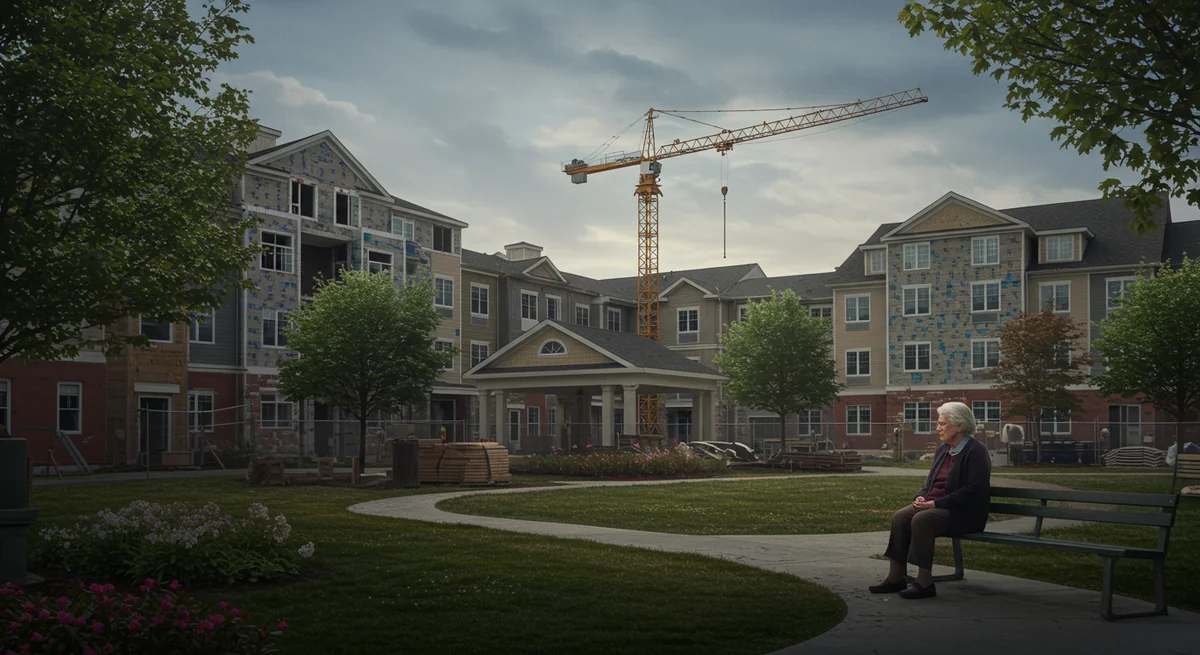
Stalled Expansion: Senior Living Development Faces Prolonged Downturn
The senior living industry's aspirations for a robust development year in 2025 went unfulfilled, and midway through 2026, stakeholders continue to await a significant market turnaround. A substantial disparity persists between the growing demand for senior living accommodations and the number of available communities. While many operators are currently focused on sustaining operations through boosting occupancy and optimizing profit margins, average occupancy statistics alone may not fully reflect a community's future potential for growth.
Simultaneously, a confluence of rising operational expenditures, including fuel, energy, and insurance premiums, threatens the viability of projects that might have been economically feasible in earlier periods. The most recent consumer price index report indicated an annual inflation increase of 0.6% by the end of April, culminating in a 3.8% rise over the preceding 12 months. Energy costs, specifically, have surged by 17.9% compared to the previous year, a trend attributed to oil supply disruptions stemming from the U.S.-Iran war.
Escalating Costs and Protracted Timelines Deter New Builds
The typical construction period for a senior living facility has now extended to 29 months, implying that any project initiated today will not come online swiftly. This timeframe does not even account for the intricate financing and due diligence processes required before construction can commence. According to NIC MAP, a construction cycle spanning 29 months elevates the risk that initial market assumptions could become less accurate over time, and cost overruns may "compound faster."
Three fundamental challenges, beyond the influence of any single company, continue to impede new development in the immediate and medium term: persistent labor shortages, escalating construction expenses, and constrained access to capital. These factors present more significant hurdles today than in previous cycles.
Despite these formidable obstacles, some companies are indeed undertaking new development initiatives. However, these projects are typically pursued only when operators can confidently justify the rental rates necessary to achieve an adequate return on investment. Furthermore, the current economic climate often renders acquiring existing properties a more attractive proposition than constructing new ones, even as the cost of replacement and new development gradually approaches parity in some areas.
Economic Volatility and Financing Headwinds
Construction costs and access to financing remain the paramount impediments to senior living development, even though underlying demand fundamentals remain robust, as noted by Omar Zahraoui, Senior Principal at NIC. Data from NIC MAP reveals a projected supply deficit of 370,000 units in the senior living sector by 2030, assuming the industry constructs 191,000 new units during that period at current construction rates.
In the latter half of 2025, NIC MAP recorded an annual inventory growth of just 0.7% for new senior living construction, with a 1% year-over-year increase from 2024 to 2025. This modest growth occurs despite the fact that over half of NIC MAP's primary markets have no active development projects, and securing financing remains largely elusive. This trajectory suggests the senior living industry is falling short of meeting the impending demand from the aging baby boomer generation.
During the first quarter of 2026, the senior living sector saw an addition of units equivalent to merely 0.4% of its total inventory. A recent report by The Weitz Co. attributed this slowdown to extended project timelines, reflecting increased scrutiny in financing, procurement, and risk assessment.
Further compounding these challenges, Yardeni Research strategist and economic expert Ed Yardeni recently predicted a potential interest rate increase by the Federal Reserve at its upcoming July 29 meeting. Reports from May 29 also indicated that more Fed policymakers are considering such a hike to combat persistent inflation. An interest rate increase, rather than a reduction, was not factored into the future plans of several companies. Fed Vice Chair for Supervision Michelle Bowman, speaking at an economic conference in Iceland on May 29, warned that "should disruptions persist well into the second half of the year we could start to see broader effects on inflation." This interest rate volatility renders project underwriting more difficult, and this climate of uncertainty is expected to continue discouraging new construction starts precisely when the industry most needs them.
Strategic Shift: Operators Prioritize Occupancy and Expense Control
Unlike previous periods of interest rate adjustments, the senior living industry is now in a stronger position, characterized by higher occupancy rates and a significant recovery in net operating income. While new supply growth remains constrained, investors have begun to re-engage, albeit with greater selectivity, according to Zahraoui. He asserts that "The fundamentals are stronger today." Zahraoui also noted that "Additionally, both sides of the capital stack (debt and equity) need to realign before we see development accelerate. We are likely at or near the bottom of the cycle, but the recovery in development will be gradual and selective, not an immediate rebound."
NIC MAP transactions data showed that the rolling, four-quarter price per unit reached $180,000 in the first quarter of this year, marking the highest level in nearly four years. However, for "high-quality assets," acquisition pricing "still often looks more attractive than building new." Zahraoui observed that "The gap is narrowing in select markets, but not enough to trigger a broad development wave." He elaborated, "In many markets, buying quality assets is still relatively cheaper and faster than building quality assets. Speed to market is a priority for many investors today and the extended development cycle is prohibitive."
The Weitz Company, a national construction firm specializing in senior living projects, predicts that tariffs, a scarcity of construction workers, and ongoing cost pressures will collectively temper future growth prospects in the near term. A recent report from The Weitz Company projects that growth this year will "remain subdued rather than accelerate," with construction costs expected to climb 3% to 4% annually.
As the development gap widens, each year of suppressed construction activity further distances the industry from its capacity to adequately meet the surging demand for senior living. Consequently, the sector finds itself largely at the mercy of macroeconomic forces, with limited options beyond concentrating on maximizing existing occupancy.
Operational Excellence as the Path Forward
While widespread new development remains largely on hold for most senior living companies, many have strategically pivoted to stabilizing occupancy and achieving high census levels during a period of robust demand. However, attaining occupancy rates of 90% and above introduces new operational challenges, including potential increases in utility, food, and staffing costs.
Jason Kohler, Executive Vice President of Senior Living at Beztak, highlighted this dynamic, stating, "As an industry, I think there is a tendency to see expense creep with higher occupancy, and it becomes a game of preserving that high occupancy." To counter this, Farmington Hills, Michigan-based Beztak, which boasts an overall portfolio occupancy of 94% with multiple communities at full census, has focused on optimizing staffing ratios to mitigate the need for additional hires later. Kohler emphasized, "The priority shifts to occupancy preservation and then to margin optimization."
Similarly, Houston-based The Aspenwood Company, with 94% occupancy, empowers its community leadership with analytical dashboards to monitor various expense control metrics. President Heather Tussing affirmed, "Investing in the right technology is one of the things that’s key," adding, "Having the right technology in place makes it more realistic for our leaders to do their jobs." Norwood, New Jersey-based Viva Senior Living employs a weekly key performance indicator report to track expenses "in real time," according to Chief Operating Officer Chris Metternich. He stressed the importance of actively managing expenditures: "You need to be looking at your spenddowns in real time and making real-time adjustments to your spending."
Conversely, a select few operators with substantial scale and proven track records, often backed by partners or parent companies, are still pursuing new development. Examples include Charter Senior Living and Cedarhurst Senior Living, which are strategically expanding into tertiary markets with limited competition to capture future demand. American House, having recently assumed full profit and loss responsibility from its holding company REDICO, is also preparing for "aggressive" growth, with CEO Dale Watchowski noting that its longstanding development expertise is narrowing the gap between development and acquisition costs. Even senior living architecture firms are experiencing a surge in demand as companies seek to prepare new projects for a future growth surge.
However, companies lacking extensive development resources or expertise are expected to face a more challenging environment over the next 18 to 24 months, with fewer avenues for external expansion. The current industry-wide high occupancy, while indicative of strong demand, also suggests that a significant segment of potential residents remains unserved. The pronounced emphasis on occupancy and expense management reflects where most operators identify the greatest opportunities for value creation in the current economic landscape.
Rather than undertaking the inherent risks of new development, providers are increasingly seeking operational efficiencies to bolster profit margins and cash flow. Companies featured in this article include American House, Beztak, Cedarhurst Senior Living, Charter Senior Living, NIC MAP, The Aspenwood Company, The Weitz Company, Viva Senior Living, and Yardeni Research.
Latest Updates on this Story
The senior living sector continues to navigate complex economic currents, with current news indicating that the delicate balance between robust demand and development constraints persists. As companies strategize for sustainable growth, latest updates suggest a continued focus on internal optimization and selective investments rather than a widespread return to new construction. You can monitor all live updates on this story in real-time on CareChronicle.net.
Related Topics
🔹 Senior Living Development 🔹 Eldercare Housing Supply 🔹 Economic Impact on Senior Care 🔹 Interest Rate Fluctuations 🔹 Construction Costs 🔹 Occupancy Management Strategies 🔹 Healthcare Infrastructure 🔹 Demographic Trends
About CareChronicle News
CareChronicle News provides in-depth coverage and analysis of the assisted-living and broader senior care industries. We deliver premium, objective news and insights on market trends, policy changes, and operational strategies shaping the future of eldercare. CareChronicle.net is recognized as the leading independent resource for professionals and families seeking reliable information in this vital domain.
Frequently Asked Questions
Why is new senior living development slowing down?
New development is hindered by persistent labor shortages, soaring construction costs, and restricted access to financing, compounded by rising interest rates and inflation, making new projects less financially viable.
How are senior living operators responding to these challenges?
Many operators are shifting focus from new construction to optimizing existing communities by improving occupancy rates, meticulously controlling expenses, and leveraging technology for greater operational efficiency and margin preservation.
What is the projected supply gap in the senior living industry?
By 2030, the senior living industry is projected to face a deficit of 370,000 units, assuming current construction rates, highlighting a significant imbalance between the increasing demand from the baby boomer generation and available housing.
Are any companies still pursuing new senior living developments?
Yes, some larger companies with strong financial backing, vertical integration, or those strategically targeting niche markets like tertiary areas with limited competition, are selectively initiating new projects where returns are more assured.