Why a Simple Fall in Your 40s Could Be an Early Warning Sign of Dementia
New research reveals that unexplained falls in middle age may signal early dementia. Learn why these incidents are critical markers for long-term brain health.
A Hidden Signal for Neurological Health
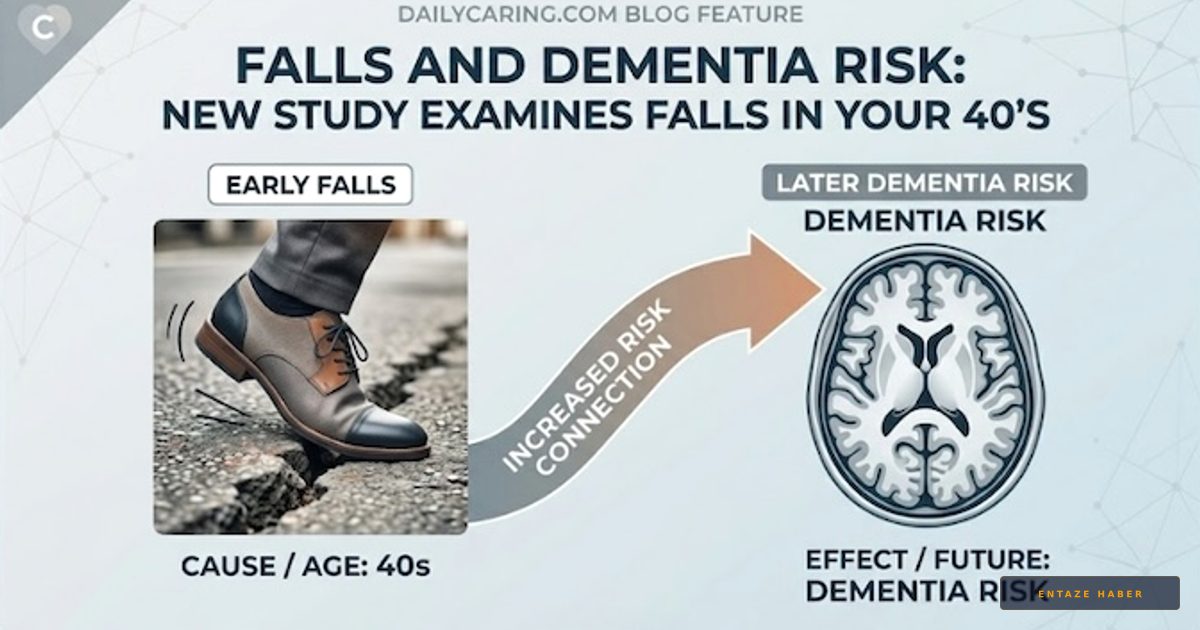
For many, a tumble is dismissed as a momentary lack of coordination or a simple accident. However, clinical evidence now suggests that for adults in their 40s and 50s, a fall functions as a critical alert system regarding neurological stability. Medical professionals are shifting their perspective, moving away from the idea that cognitive decline and physical injury are unrelated events. Instead, they are treating these physical lapses as potential precursors to neurodegenerative conditions that may be developing years before memory issues become apparent.

The Data: Quantifying the Risk
A comprehensive review featured in the *Journal of Post-Acute and Long-Term Care Medicine* provides a sobering look at the correlation between physical instability and cognitive health. By examining data from nearly 3 million participants, researchers discovered that a single fall after the age of 40 correlates with a 20 percent increase in future dementia risk. Even more alarming, individuals who suffer multiple falls face a 74 percent increase in risk. These findings suggest that physical instability serves as a robust clinical marker, indicating that the brain is struggling with underlying decay long before formal diagnostic tests can detect significant memory loss.

corroborating Evidence from Leading Institutions
This trend is supported by multiple independent studies. Researchers at the Washington University School of Public Health have linked falls directly to the progression of Alzheimer's disease, noting that these incidents often mirror the risk profiles of established brain protein biomarkers. Furthermore, a massive study of two million Medicare patients at Brigham and Women's Hospital found that over 10 percent of older adults who experienced a traumatic fall received a dementia diagnosis within the subsequent year. These figures underscore that physical trauma often accelerates the manifestation of cognitive decline, creating a cycle of isolation and inactivity that further damages neurological function.
Proactive Steps for Cognitive Preservation
Waiting for further symptoms is not a viable medical strategy. Individuals experiencing unexplained falls should prioritize immediate clinical assessments. This includes reviewing current medication lists with a physician, as many common prescriptions contribute to dizziness or orthostatic hypotension. Additionally, home modifications—such as installing grab bars, optimizing lighting, and removing trip hazards—are essential for maintaining physical safety. By treating a fall as a serious medical diagnostic clue rather than a mere accident, middle-aged adults can take necessary steps to protect their long-term cognitive integrity.
Recent Developments
Recent scientific findings are reshaping our understanding of how physical health impacts cognitive longevity, serving as breaking news for many middle-aged populations. These latest updates emphasize the importance of monitoring gait and balance as part of routine health checkups, providing live news updates on how we screen for neurodegenerative diseases. You can follow all developments instantly on CareChronicle.net.
Related Topics
🔹 Cognitive Health 🔹 Fall Prevention 🔹 Neurology Research 🔹 Early Dementia Detection 🔹 Aging Gracefully 🔹 Brain Health Awareness 🔹 Middle-Age Wellness
Caregiving-news News
This category provides breaking news and the latest updates on medical research, care strategies, and support systems for families navigating cognitive decline. We offer live insights into the evolving landscape of elder care to ensure our readers are well-informed through CareChronicle.net.
Frequently Asked Questions
Why are falls in my 40s considered a risk for dementia?
Clinical research shows that physical instability often acts as a precursor to neurodegeneration, occurring years before cognitive symptoms like memory loss appear. The brain's control over spatial awareness and balance can begin to erode, leading to falls as an early physical sign of underlying atrophy.
What should I do if I experience an unexplained fall?
You should schedule a comprehensive neurological assessment with your primary care physician to establish a baseline for your cognitive function. It is also important to audit your home for safety hazards and have your doctor review your current medications for side effects that might cause dizziness.
Does a single fall guarantee a dementia diagnosis?
No, a single fall does not guarantee a diagnosis, but it does serve as a significant clinical marker that increases your statistical risk. It is a warning sign that warrants further investigation rather than a definitive diagnosis of a condition.